
September 29, 2026
11 min read
Industry Trends

What Is AI Short Drama? The Micro-Drama Trend Explained

An AI short drama is a serialized vertical video series made of fast-paced, minute-long episodes produced using artificial intelligence tools. Anyone exploring what is AI short drama will find mobile-first stories driven by dramatic cliffhangers, consistent characters, and prompt-generated visuals.

By Reviewed by Jonah WellerHow we review

What is AI short drama and how does the format work?

Understanding what is AI short drama begins with recognizing how serialized vertical narratives fit mobile viewing habits. An AI short drama is a serialized narrative made of vertical video clips created with artificial intelligence tools. These shows typically live on platforms like TikTok, YouTube Shorts, and dedicated mobile apps, delivering bite-sized episodes that run between one and two minutes. Every episode delivers fast dialogue, dramatic tension, and cliffhanger endings designed specifically for smartphone viewing.

Unlike traditional television shows or indie web series, an AI micro drama relies on text-to-video and image-to-video models to produce visual scenes without physical sets, actors, or filming crews. Writers can draft a script, generate voiceovers, and produce corresponding cinematic footage in a matter of hours. This shift allows independent creators to publish full narrative arcs at a fraction of standard production costs.

Audiences consume these quick stories during daily commutes or quick breaks between tasks. The format strips away slow exposition in favor of immediate emotional payoffs, romantic conflicts, or suspenseful twists. Because viewers can watch an entire storyline in thirty minutes, the format has rapidly captured global attention across social channels.

Why vertical micro-episodes dominate mobile AI video platforms

Mobile viewers now demand fast, engaging visual storytelling that fits naturally into their daily routines. Traditional streaming shows require a thirty-minute commitment, but an AI generated drama delivers an intense narrative burst in under ninety seconds. Viewers can finish a complete episode while waiting in line, making episodic storytelling more accessible than ever before.

Platform algorithms on TikTok and Instagram heavily reward content that achieves high completion rates and repeat viewings. Vertical video formats command the entire smartphone screen, minimizing outside distractions and pulling the viewer directly into the character's immediate crisis. When every clip ends on an unresolved hook, audiences naturally swipe to the next installment without leaving the app.

Production speed also fuels this surge in popularity across video networks. Creators can respond to emerging audience preferences within days rather than waiting through months of post-production. This rapid feedback loop keeps channels fresh and allows creative teams to test experimental genres without risking substantial financial capital.
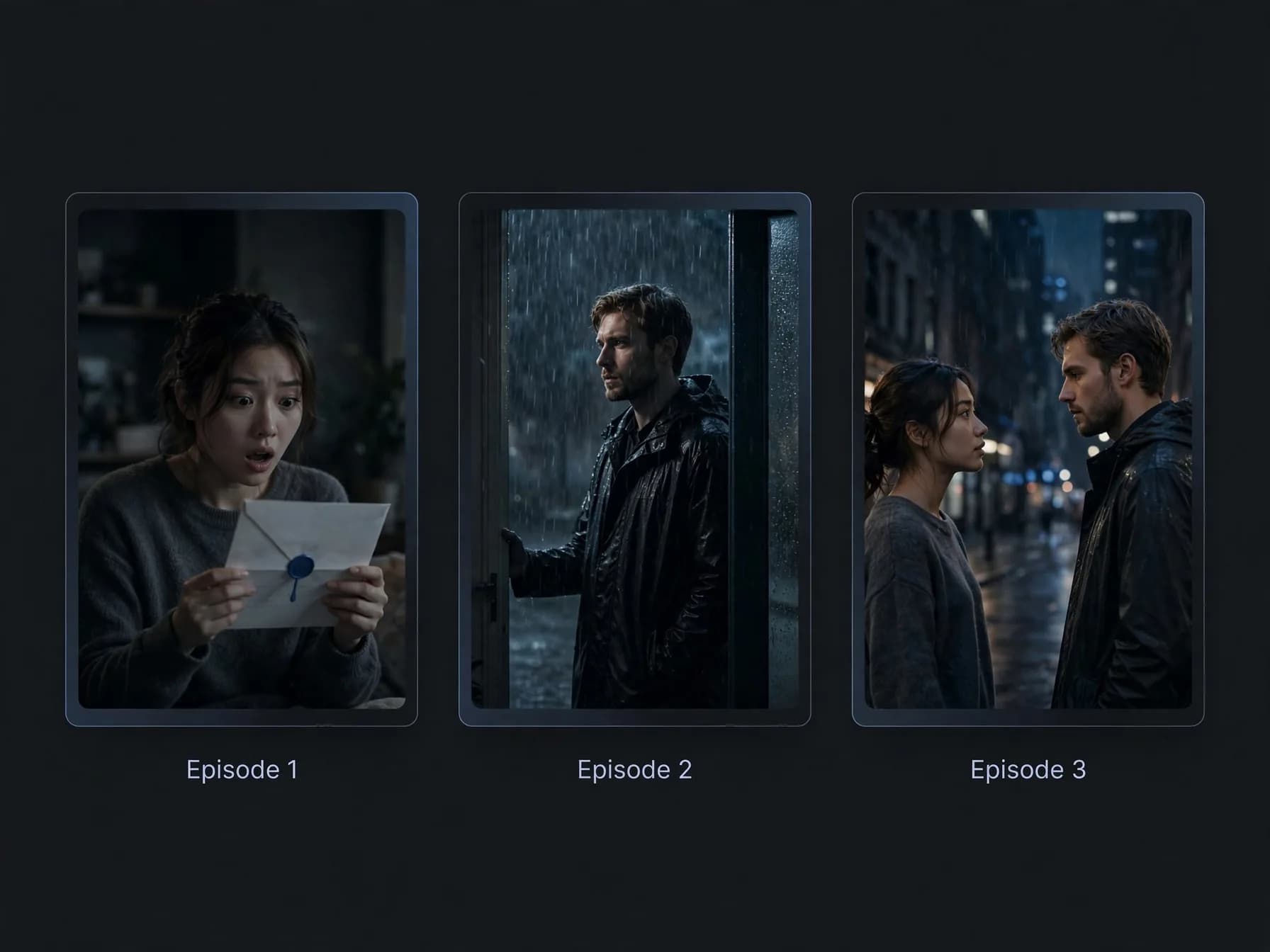
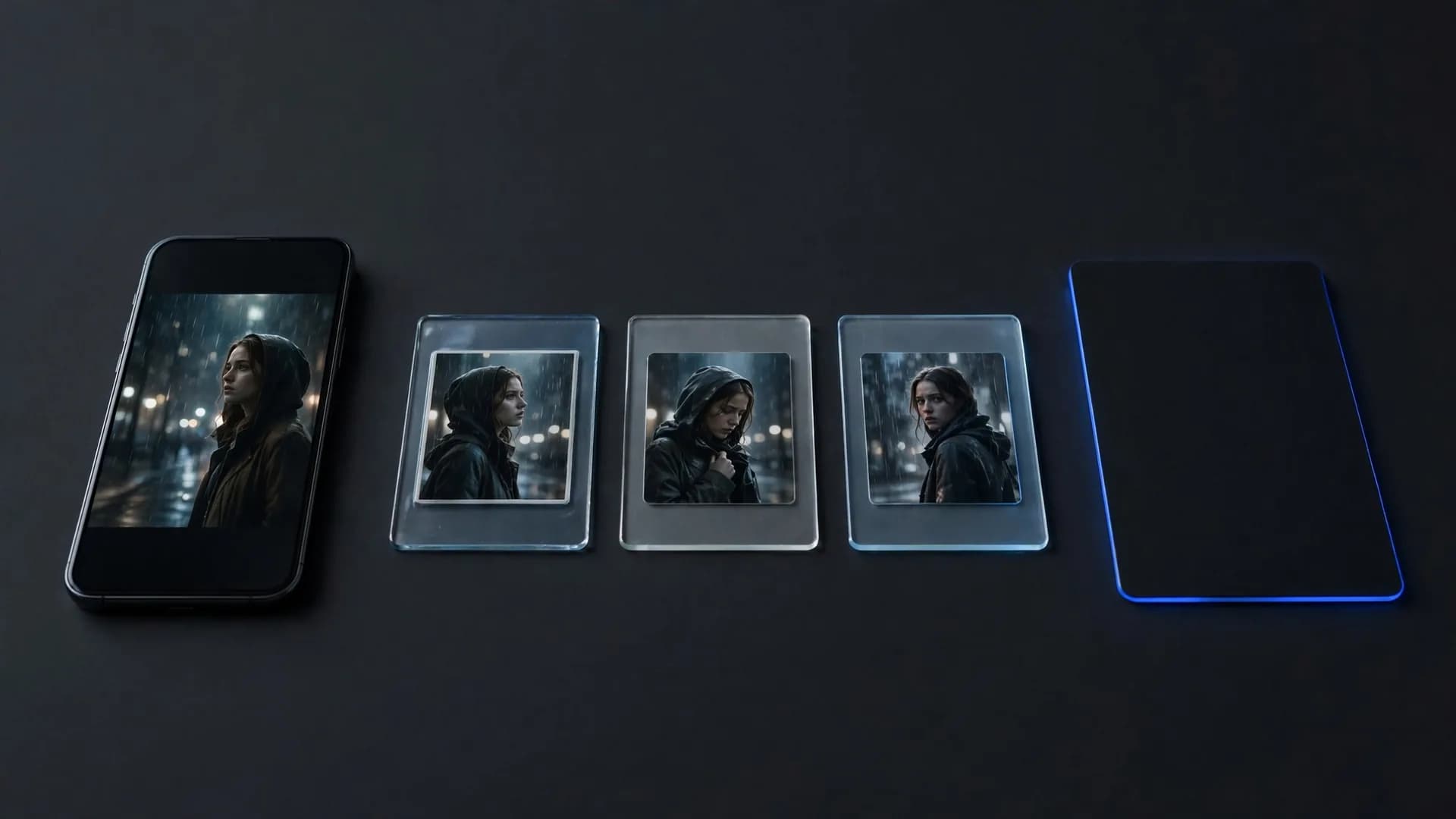
Three vertical micro-drama episodes: a woman reading a letter, a man in a rainy doorway and their confrontation

How micro drama generation turns simple prompts into episodic AI videos

The micro drama generation process begins with a tight script tailored for rapid visual transitions. Creators break their overarching storyline into individual scenes that run between five and ten seconds each. Writing clear scene descriptions helps generative video models accurately capture facial expressions, lighting conditions, and character movement.

Once the script is ready, creators feed detailed text prompts or still reference images into tools like OnVid's AI video generator. By selecting dedicated models for realistic motion, directors produce high-definition shots of dramatic confrontations, cityscapes, or emotional close-ups. Uploading consistent character portraits ensures that the main cast remains recognizable across sequential cuts.

Finally, producers assemble the rendered scenes into an editing timeline to layer dialogue, ambient sound, and background music. Adding vertical subtitles is essential, as many mobile users watch clips with their device volume muted. The finished episode exports directly to mobile formats, ready for immediate distribution across social channels.

Key narrative formulas in short form video production for episodic AI videos

Successful short form video production follows strict storytelling rules that differ sharply from long-form filmmaking. Every episode must establish the central conflict within the first three seconds to stop viewers from scrolling away. Whether the scene features a sudden betrayal, a shocking confession, or an impending disaster, immediate stakes are non-negotiable.

Pacing remains brisk throughout the middle act to sustain engagement across mobile devices. Characters speak in punchy, emotionally charged dialogue rather than exchanging polite pleasantries or lengthy backstories. Exploring structured video script ideas can help solo directors structure each sixty-second segment so that every line pushes the plot toward an inevitable clash.

The final five seconds of any episode must deliver a decisive cliffhanger. Ending on a raised weapon, a discovered secret, or an unanswered question creates an irresistible urge to watch the next clip. Serialized dramas thrive on momentum, and mastering the micro-cliffhanger is the primary factor that converts casual viewers into loyal series subscribers.
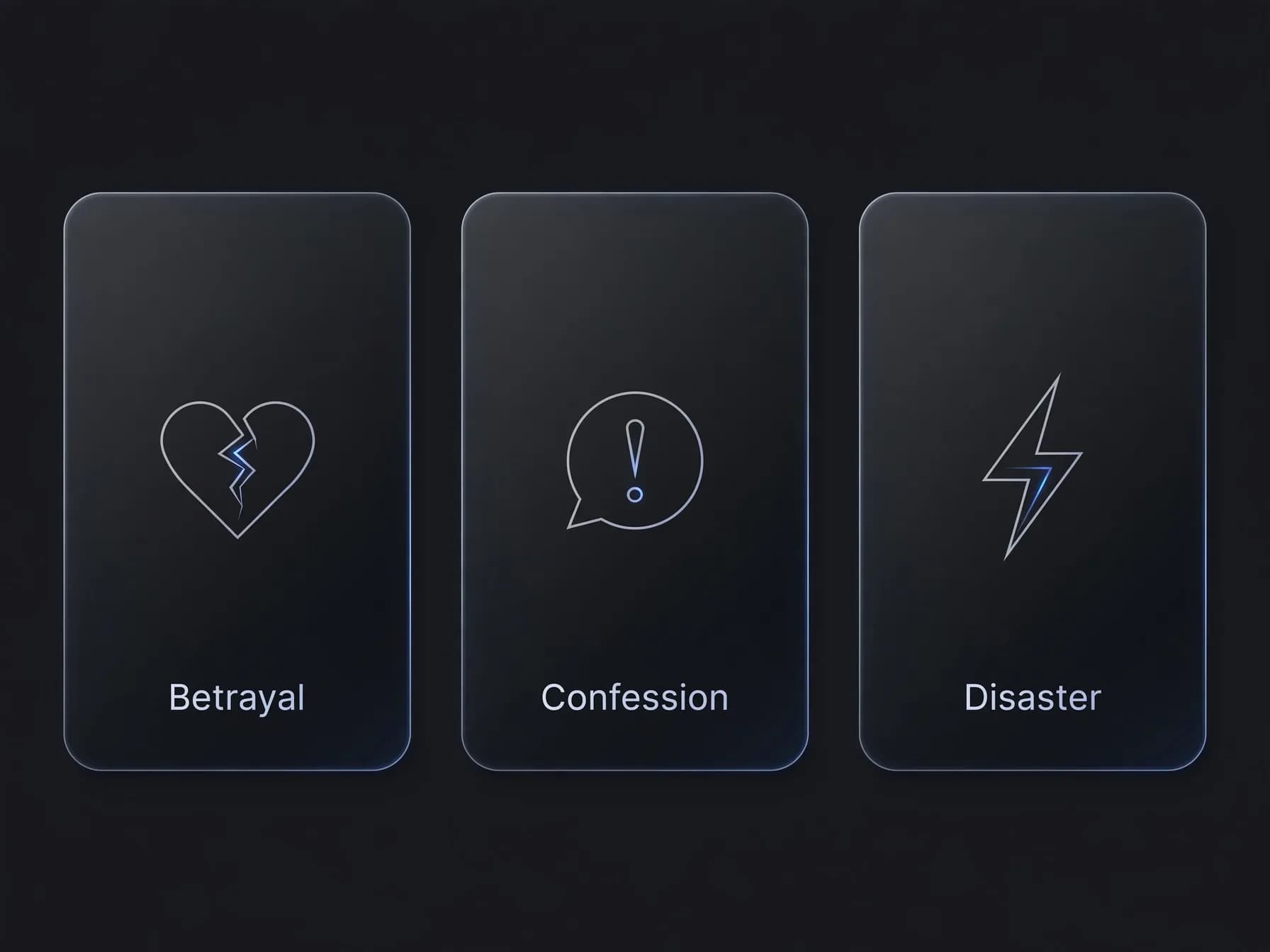
Three micro-drama hooks as icons: betrayal, confession and disaster

Character consistency techniques for episodic AI videos

Maintaining uniform character appearances across dozens of scenes is one of the most critical challenges in episodic visual storytelling. When an actor looks different from shot to shot, viewers quickly lose immersion and abandon the series. Modern video workflows solve this hurdle by combining static reference portraits with multi-image guidance models.

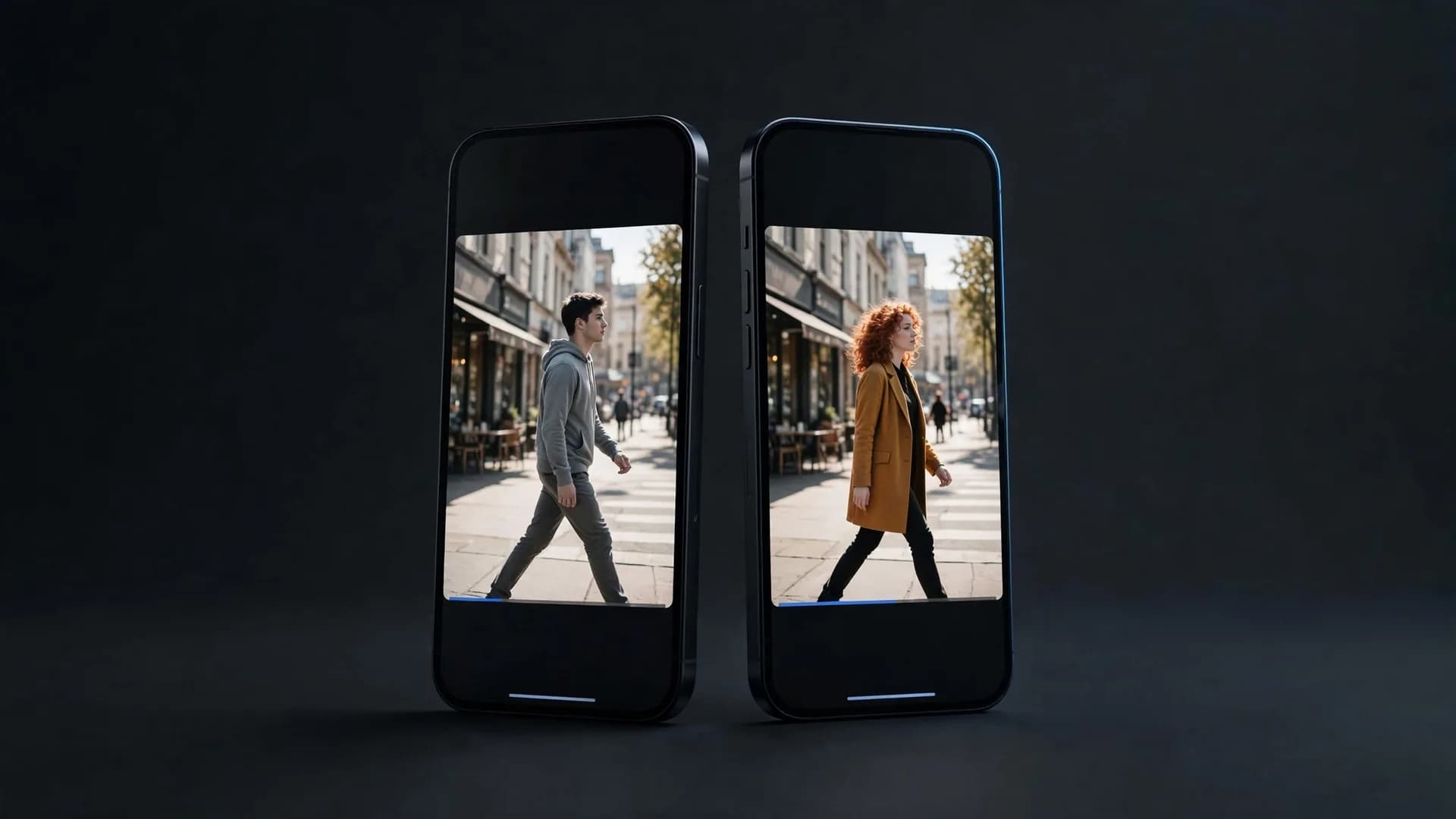
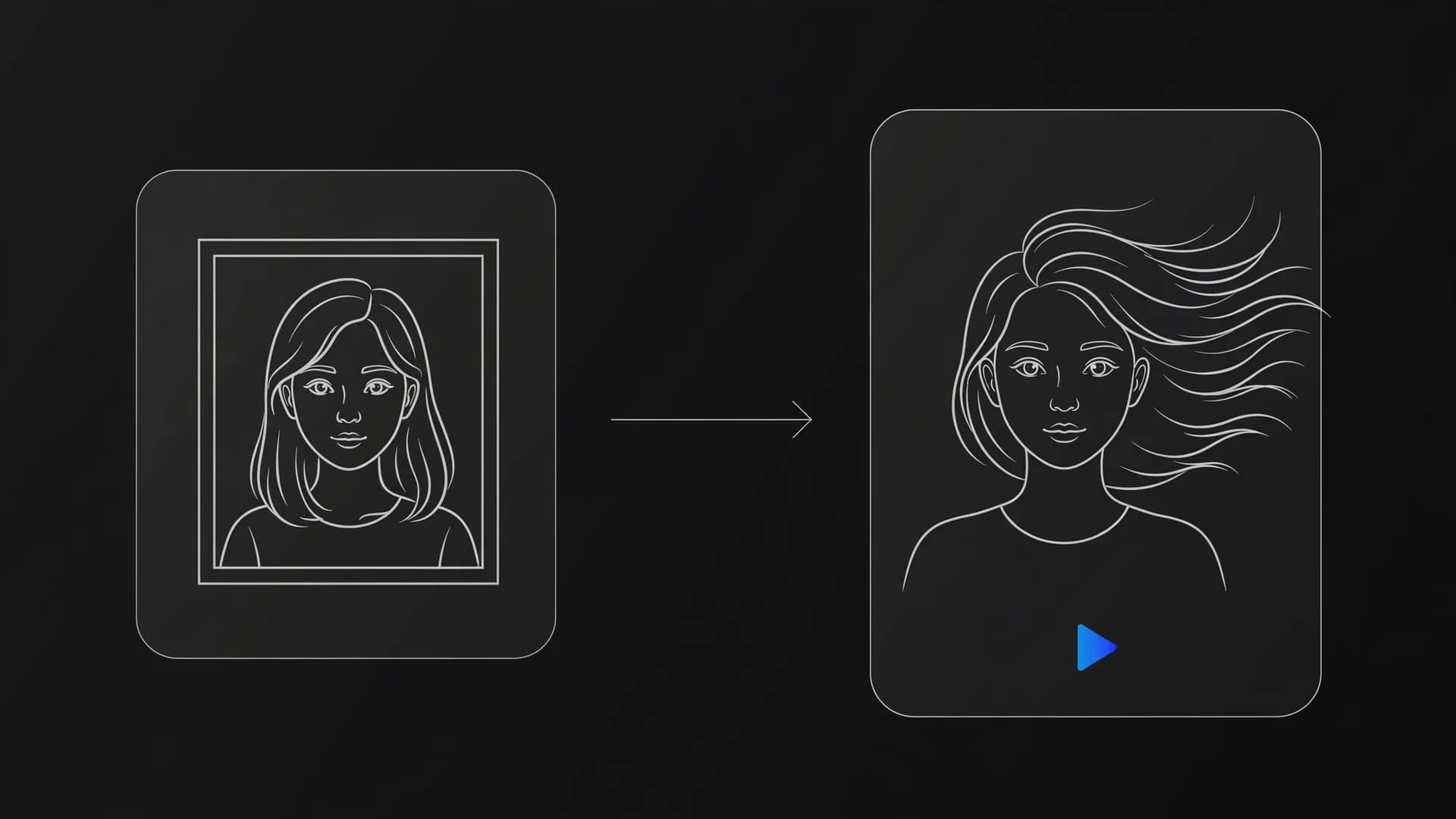
Creators generate an initial character portrait featuring specific facial structures, distinctive hairstyles, and signature clothing. By feeding that reference image into image-to-video generation engines, the model preserves the subject's key visual identity while rendering natural head turns, walking motions, or emotional expressions. Keeping lighting prompts identical across scenes further reinforces a unified cinematic look.

For complex two-person dialogues, directors often cut between alternating single-person close-ups rather than rendering wide two-shots. This traditional over-the-shoulder editing technique simplifies camera control and ensures that each character's facial likeness remains stable throughout dramatic conversations.

What is AI short drama production like for solo creators?

Producing an AI mini series once required a production budget, sound stages, and specialized equipment that were out of reach for independent writers. Today, a solo creator working from a laptop can oversee an entire production pipeline from concept to final cut. Generative visual tools handle set construction, lighting, and camera movement based entirely on written prompts.

Creators can experiment freely with imaginative premises, historical epics, or fantasy concepts without worrying about location scouting or wardrobe expenses. Because you can generate individual video clips in seconds, testing multiple camera angles or visual styles costs very little time. This accessibility allows creative storytellers to focus entirely on compelling writing, strong pacing, and character development.

As audience appetite for mobile-first entertainment continues to expand worldwide, independent producers possess an unprecedented opportunity to build dedicated followings. Anyone with an engaging concept can script a serialized drama and bring it to life using modern generative workflows, establishing their own digital entertainment brand one short episode at a time.
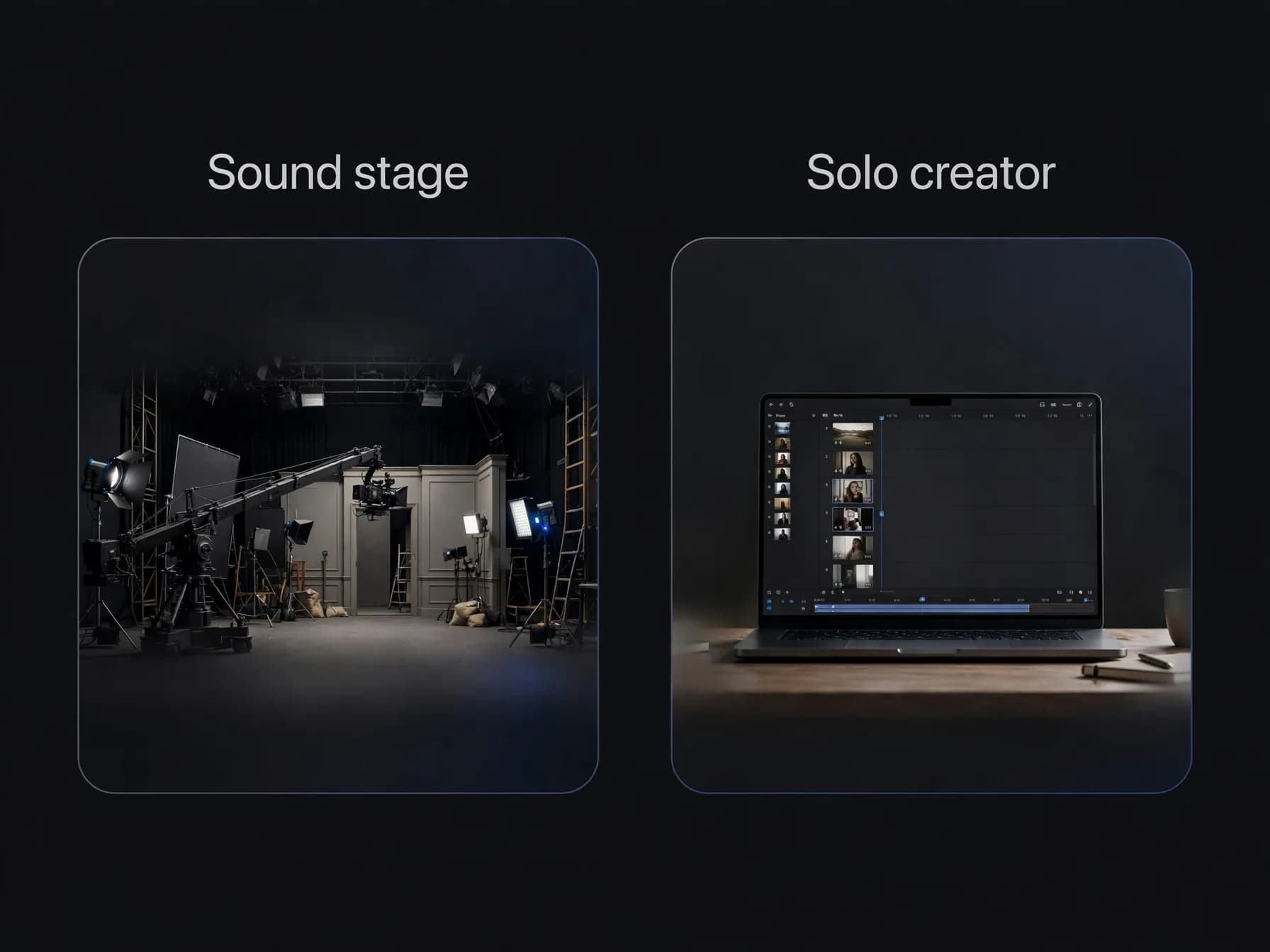
Comparison of a film sound stage with cameras and lights versus a solo creator's laptop editing vertical episodes

The future of AI short dramas and micro-storytelling

Understanding what is AI short drama reveals how vertical formatting, mobile distribution, and rapid visual generation are reshaping digital entertainment. While traditional television demands large crews and multi-month schedules, serialized micro-stories now move from a written outline to multiple finished episodes in just hours.

For independent storytellers and digital creators, combining classic cliffhangers with modern generation tools makes fast-paced serial AI video accessible at any scale.

Common questions about what is AI short drama

Find quick answers to help you understand what is AI short drama, how serialized vertical episodes work, and how modern creators produce them.

What is AI short drama, and how does it differ from traditional web series?

When exploring what is AI short drama, viewers discover a serialized, vertical video series of fast-paced 60-second to 120-second episodes produced using generative artificial intelligence tools. While traditional series rely on physical soundstages, large crews, and months of post-production, an AI short drama turns written prompts and still images into moving scenes in hours or days. The format is designed specifically for smartphone screens, delivering high-stakes conflicts and immediate cliffhangers.

Why are viewers asking what is AI short drama across social platforms?

Viewers search what is AI short drama because hyper-engaging vertical stories keep taking over social feeds with cliffhanger hooks and stylized visuals. Platforms like TikTok and dedicated streaming apps have turned these micro-stories into viral hits, prompting audiences to explore how synthetic video pipelines generate continuous character drama. The rapid release schedule of new episodes keeps audiences constantly searching for the technology behind the scenes.

Which AI drama genres are currently the most popular among viewers?

The dominant AI drama genres include billionaire romances, fantasy reincarnation, revenge thrillers, and urban suspense. These themes thrive because their emotional contrasts and dramatic reversals hook mobile viewers within the first three seconds of playback. Creators also explore science fiction and historical fantasy, where digital scene generation makes high-concept visual effects affordable.

How does short drama script writing differ from writing standard television scripts?

Short drama script writing focuses on extreme narrative velocity, placing an intense conflict or revelation in every single 60-second to 90-second episode. Writers strip away lengthy establishing scenes to ensure every beat leads directly to a suspenseful cliffhanger that drives viewers to watch the next episode. Dialogue remains punchy, emotional, and centered on clear character stakes.

Why are there so many AI short dramas appearing right now?

The sudden surge comes from a mix of skyrocketing mobile drama demand and dramatic drops in video production barriers. Producing a traditional 80-episode micro-drama can cost tens of thousands of dollars, whereas modern digital workflows let independent storytellers render polished scenes on desktop computers. Viewers consume these bite-sized serials during short commutes and breaks, creating an endless appetite for fresh episodes.

How are AI short dramas made from start to finish?

Creators begin by drafting a multi-part script with intense episode cliffhangers, then create character reference sheets to ensure facial consistency across scenes. Next, they use an AI-video-generator to animate each scene using text prompts, image references, or video references. Finally, editors stitch the generated clips together in vertical editing software, adding voiceovers, atmospheric sound effects, and background music.

What is the best AI short drama app for mobile viewing and creation?

For viewing finished productions, dedicated streaming apps like ReelShort, DramaBox, and ShortMax lead mobile app stores alongside vertical clips on TikTok and YouTube Shorts. For creating scenes, storytellers rely on OnVid's AI-video-generator to render text prompts, animate character portraits, and produce high-definition clips without filming equipment. Combining specialized generation platforms with standard mobile editors gives creators the fastest workflow.

Can I create a free AI drama without upfront production costs?

You can begin testing scene concepts after you sign up, using introductory credits from OnVid to turn opening scripts and character photos into moving clips. Because plan credits are charged per second of video and vary by model, you can review dialogue scenes and camera motion before selecting a Pro or Max tier. Multi-episode series production relies on these credit subscriptions to sustain recurring generations.

What is AI short drama TikTok, and why is vertical drama trending on the app?

AI short drama TikTok content refers to serialized micro-episodes edited in full-screen 9:16 vertical video and published natively on the TikTok platform. TikTok's algorithmic feed rewards high viewer retention and instant story hooks, making dramatic 60-second clips an ideal match for the platform's audience. Creators post individual scenes as sequential parts, encouraging viewers to visit profile playlists to binge entire storylines.

What is AI short drama app technology, and how do dedicated platforms work?

An AI short drama app is a mobile streaming platform that hosts serialized, pay-per-episode or ad-supported micro-series designed for vertical smartphone consumption. These platforms use algorithmic recommendations, coin unlock systems, and episodic push notifications to keep viewers engaged across 50 to 100 consecutive micro-episodes. Many publishers are integrating synthetic workflows to produce new series faster and test narrative concepts at lower overhead.

Can you give me a list of AI short dramas that gained major traction?

Early viral titles that captured global attention include experimental productions like Where Dreams Collide, The Golden Rebirth, and the widely discussed romance serial I Can't Sleep Without You. While some productions combine human actors with synthetic background extension, fully generative micro-series continue to launch across YouTube, TikTok, and specialized drama apps every week. Independent studios frequently publish anthology experiments exploring suspense and sci-fi premises.

How long are short dramas in terms of episode count and run time?

Individual episodes in a short drama typically run between 60 and 120 seconds, crafted specifically to maintain attention during mobile sessions. A full season often spans between 40 and 100 episodes, resulting in a total runtime comparable to a standard 90-minute feature film. This modular structure allows audiences to watch a few minutes at a time or binge an entire storyline in one sitting.

Is Netflix using AI to make movies and episodic dramas?

Netflix utilizes machine learning primarily for recommendation algorithms, automated subtitle translation, content localization, and selective visual effects assistance rather than authoring fully generative dramas. Major entertainment studios remain bound by guild agreements and intellectual property frameworks that prioritize human screenwriters and performers. However, streaming platforms actively monitor synthetic video advancements as post-production visual enhancement tools evolve.

Are short drama apps safe to download and browse?

Mainstream short drama apps downloaded from official app stores like Google Play and the Apple App Store are generally secure regarding device safety, but users should monitor in-app purchase systems. Many micro-drama platforms use microtransactions where unlocking all episodes of a series can become expensive over time. Reviewing subscription terms, coin packages, and app permissions ensures a safe and predictable entertainment experience.

What is a bad fact about AI in media production?

A notable challenge is visual drift, where character faces, clothing details, and hand anatomy subtly change between consecutive generated shots. Maintaining exact continuity across a multi-episode drama requires careful prompting, character keying, and repeated generation runs. Additionally, training data controversies and uncertain copyright protections present legal hurdles that independent creators must navigate.

What to not ask an AI when planning a dramatic video project?

You should not ask an AI system to copy protected movie scripts, replicate trademarked fictional universes, or duplicate the exact likeness of real celebrities without legal authorization. Requesting real-world face-swaps or generating misleading personal content violates responsible creation guidelines and platform terms-of-service. Focus your prompts instead on original characters, distinct worldbuilding, and fresh emotional narratives.

Can creators sell or commercially monetize AI short dramas?

Commercial use depends on the model that made the video; check the OnVid Terms-of-Service and the model's terms before commercial use. Platforms and underlying generative models maintain distinct commercial licensing guidelines that govern monetization on YouTube, TikTok, or private video-on-demand services. Reviewing model licenses before publishing ensures your project adheres to copyright and monetization policies.

See similar blogs

More from the blog