
What visual glitches show how to tell if a video is AI generated?
Learning how to spot AI videos starts with watching for physics glitches that standard cameras never record. Synthetic clips often struggle with physical continuity, revealing morphing fingers, floating accessories, and liquid transitions between objects. When you watch closely, solid edges may soften and reform across different frames.
Lighting inconsistencies also give away synthetic rendering. Shadows might point in two contradictory directions, or reflections in puddles and eyeglasses fail to match the surrounding scene. Natural light follows strict optical laws that generative diffusion models frequently approximate rather than calculate accurately.
Finally, observe the background details behind the main subject. Crowds in synthetic footage often feature distorted faces, repeating body parts, or people who fade into architecture. These visual anomalies make it simple to spot AI generated video material without specialized gear.
12 signs a video is AI generated
Learning how to spot AI videos starts with fine details that video models still get wrong. Check a suspicious clip against these 12 signs:
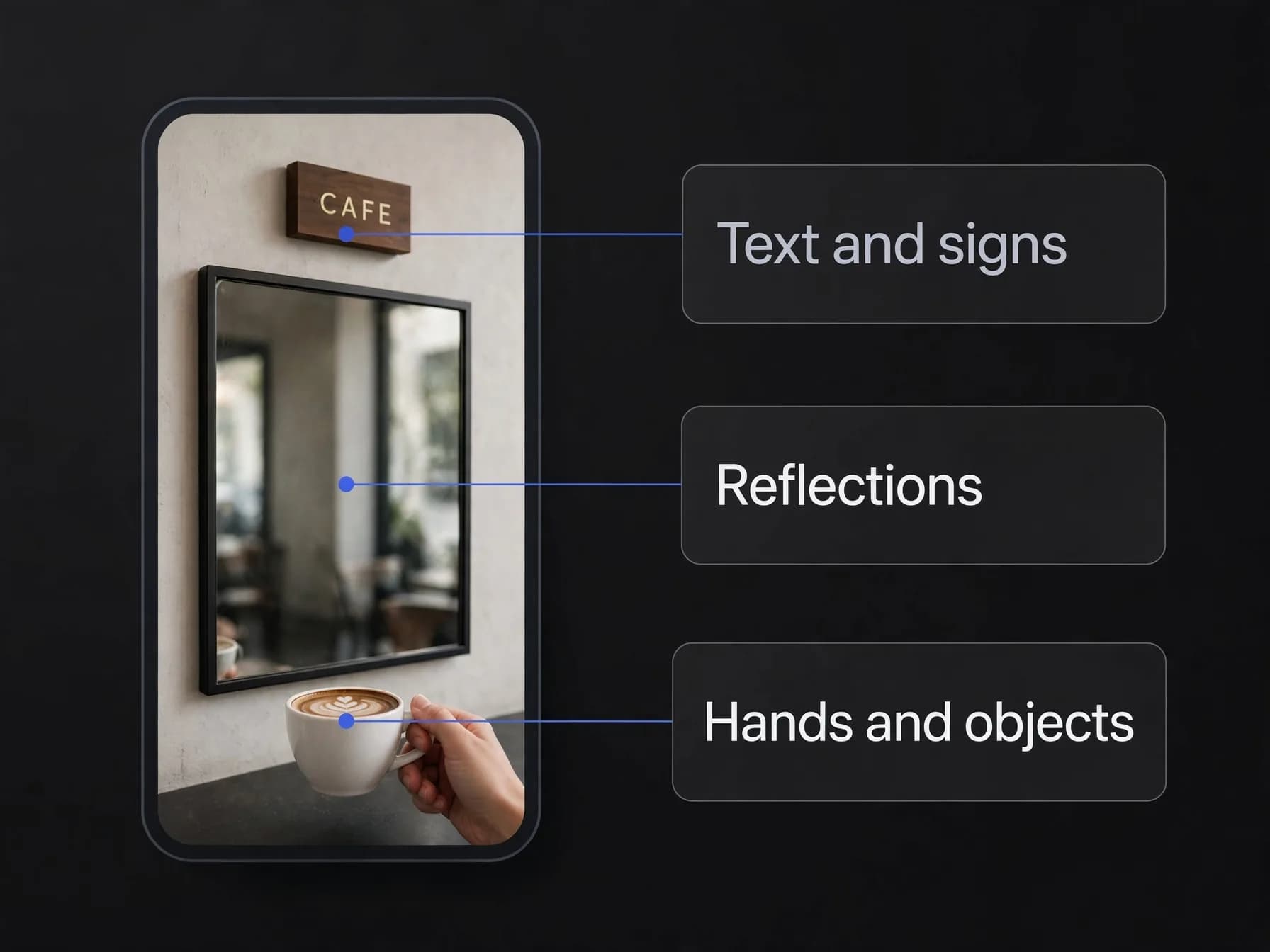
1. Hands and fingers
digits merge, split, bend the wrong way or change count between frames.
2. Faces and teeth
teeth, earrings or glasses morph, and facial features drift when the head turns.
3. Blinking
eyes blink too rarely, too often or with a rigid, mechanical rhythm.
4. Hair and clothing edges
strands and fabric melt into the background instead of keeping a clean outline.
5. Text
signs, labels and screens show garbled letters that shift from frame to frame.
6. Background objects
items appear, vanish or change shape when the camera moves.
7. Straight lines
fences, door frames and window edges bend or ripple during a pan.
8. Light and shadows
shadows point in different directions or don't match the visible light source.
9. Reflections
mirrors, water and glasses reflect something that doesn't match the scene.
10. Physics
liquids pour oddly, objects pass through each other or ignore gravity.
11. Lip sync and voice
mouths miss the closures on p, b and m sounds, and voices lack breaths or room tone.
12. Shot length
the video is a string of 5 to 10 second shots with no long, continuous take.
One sign alone proves little, since real footage can be blurry or compressed. Several signs together are a strong hint the clip is synthetic.
Three inspection steps to verify if an AI video is real
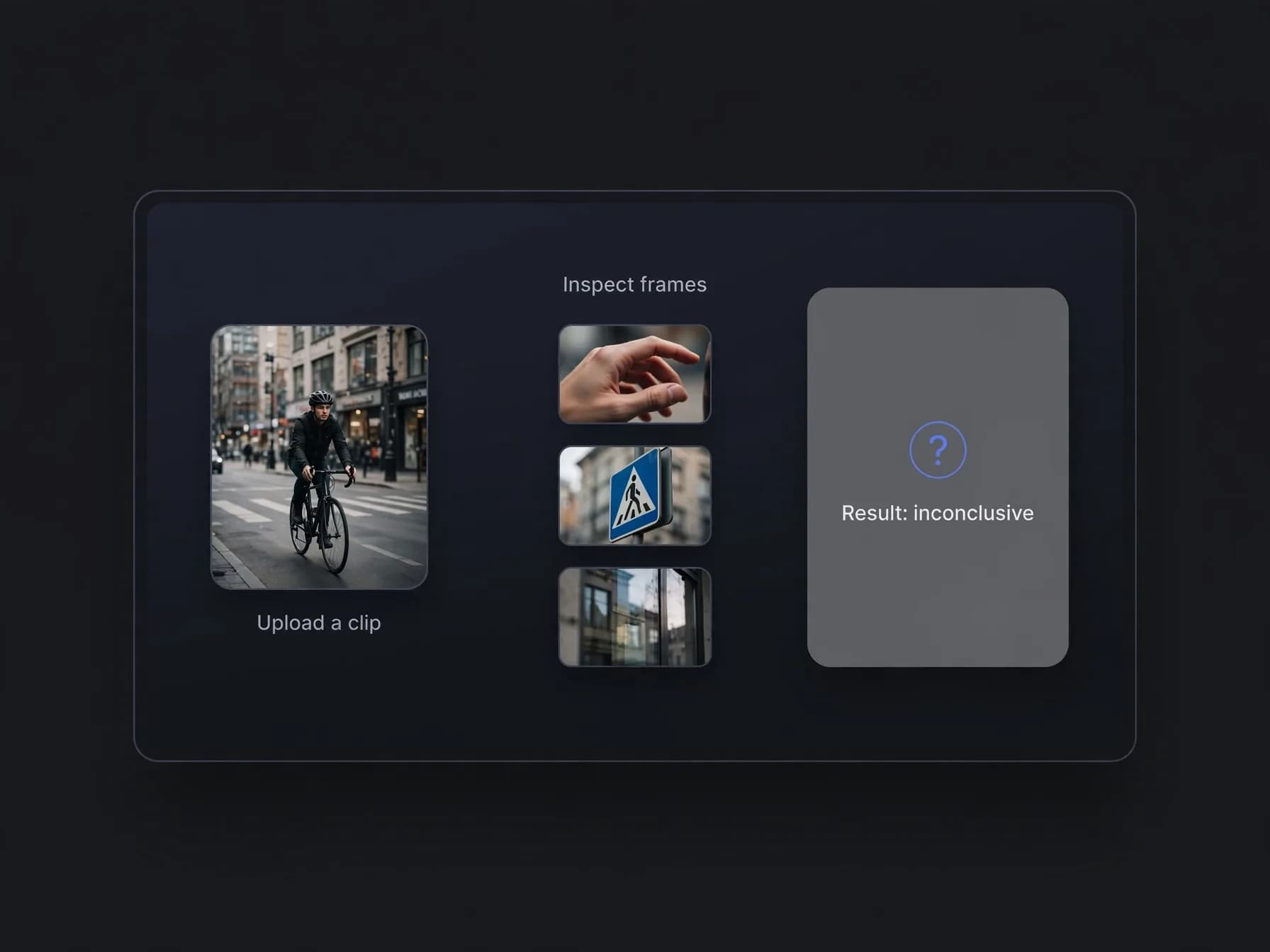
Step 1: Pause the clip and examine freeze frames around high-speed motion
Scrubbing through individual frames exposes unnatural blurring, extra limbs, and boundary warping that normal playback hides. High-action scenes usually reveal warping textures around hands and facial boundaries first.
Step 2: Zoom into human facial features like eyelashes, teeth, and skin texture
Genuine footage retains organic pores, asymmetrical wrinkles, and distinct eye reflections. Synthetic human renders frequently produce waxy, over-smoothed complexions paired with unnaturally uniform teeth.
Step 3: Analyze the temporal consistency across every camera pan
Real camera moves create predictable parallax shifts between foreground and background layers. Following these three steps allows anyone to identify AI videos before sharing them across social feeds.
Can you check if video is AI generated online free with automated tools?
Many creators want to check if video is AI generated online free without purchasing enterprise forensic software. Free online scanners evaluate digital noise, compression artifacts, and pixel distributions to flag synthetic markers. These web utilities provide rapid probability scores to help you decide if further manual review is needed.
However, automated detectors carry clear limitations that users should remember. Heavy social media compression, repeated re-encoding, and low video resolution often confuse detection algorithms. A compressed real clip may register as synthetic, while a pristine AI clip might slip through undetected.
Treat free online scanners as an initial screening layer rather than an absolute verdict. Combine algorithmic scores with your own visual check to reach a balanced conclusion. Modern AI video detection works best when automated scanning supports human visual scrutiny.
Audio mismatches and unnatural speech rhythms in AI video scenes
Sound design offers another dependable method to evaluate whether a video contains synthetic elements. Generative speech often lacks organic breathing sounds, natural vocal fry, and subtle room acoustics. Synthetic voices can sound flat, with mechanical pacing and uniform syllable duration across long sentences.
Lip synchronization provides immediate visual evidence during spoken passages. Pay close attention to whether plosive consonants like B, P, and M line up with mouth closures. In synthetic clips, the mouth often continues moving after speech ends or opens before words begin.
Ambient room tone can also expose automated production techniques. Real recordings capture small background sounds, mic handling noise, and acoustic reverberation that match the physical room. When you detect AI video assets, missing room acoustics often reveal synthetic dialogue immediately.
Why source tracing reveals how to tell if a video is AI generated
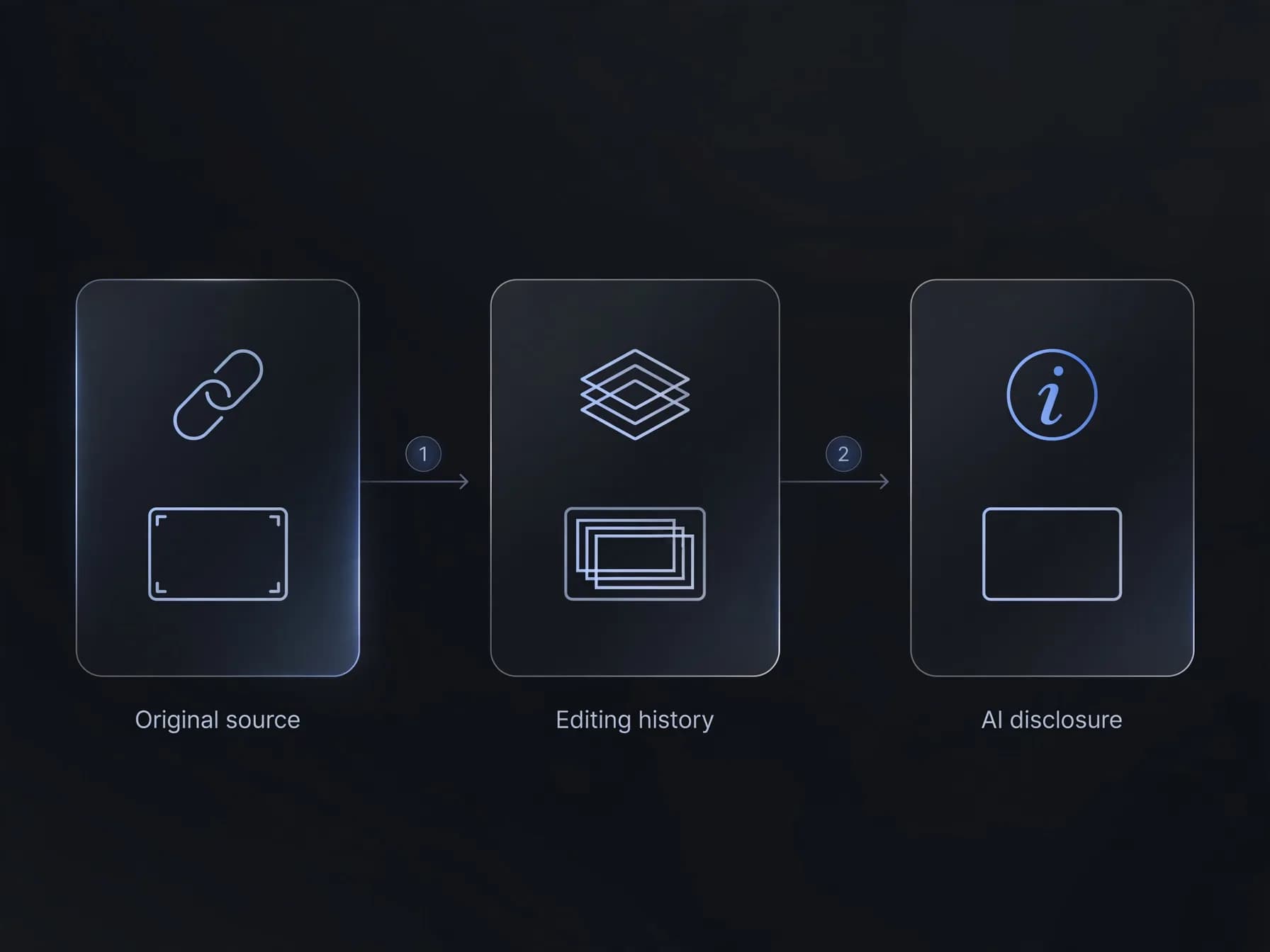
Investigating the original source and file provenance is critical in understanding how to tell if a video is AI generated. Running reverse image searches on extracted keyframes helps trace where the footage first appeared online. This technique frequently leads back to generative forums, creator portfolios, or prompt showcase channels.
Digital provenance standards like C2PA credentials embed cryptographic metadata directly into media files. Platforms and modern cameras use these content credentials to record whether footage was captured on hardware or produced by software. Checking file metadata often confirms the origin without any subjective guesswork.
Understanding the broader ethics of AI video helps viewers navigate modern social media responsibly. Responsible creators using OnVid's text to video platform clearly label synthetic media to maintain audience trust. Verifying the creator account and examining publication context prevents misleading footage from spreading unchecked.